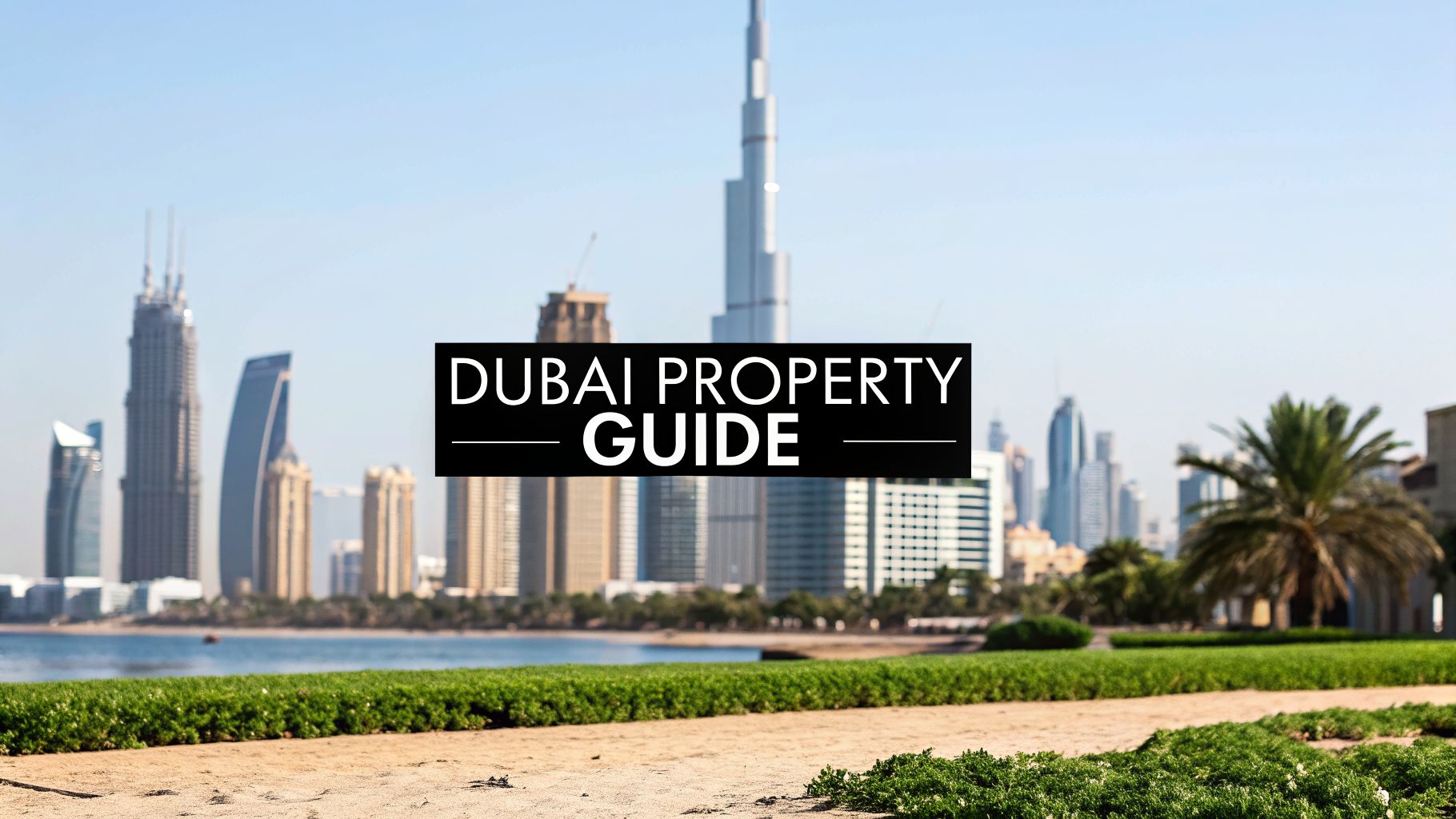
For high-net-worth international investors, buying property in Dubai represents far more than a simple real estate transaction; it is a strategic entry into one of the world’s most dynamic and resilient markets. It provides a direct route to impressive rental yields, a famously tax-efficient environment, and the security of residency in a truly global city. This is not merely acquiring an asset; it is about securing a foothold in a stable, high-growth economy that prioritises capital preservation and lifestyle quality.
Why Dubai Is A Global Hub For Property Investment
Dubai has firmly established its reputation as a premier destination for discerning individuals and sophisticated investors seeking to diversify their portfolios with high-performing assets. The city’s allure extends well beyond its iconic skyline; it is built on tangible financial and lifestyle advantages that distinguish it from many traditional European markets.
Perhaps the most compelling reason for buying property in Dubai is the potential for exceptional rental yields. On average, investors can anticipate returns of 6-8%, a figure that consistently outperforms the more modest 3-4% typically seen in major UK cities.
This strong performance is amplified by a highly efficient tax framework. Dubai levies no income tax on rental profits, a significant draw for buyers accustomed to surrendering a considerable portion of their earnings in their home countries.
Strategic Financial Advantages
The financial logic for investing in Dubai is unequivocal. The absence of annual property taxes and capital gains tax creates an environment where returns are genuinely preserved. This stands in sharp contrast to the complex and often burdensome tax systems found in many Western property markets, making Dubai a refreshingly straightforward and profitable choice for luxury real estate investment.
Beyond the compelling financials, the emirate’s regulatory environment, meticulously overseen by the Dubai Land Department (DLD), offers a level of security and transparency that instils confidence in foreign nationals. This stability is a key component of the city’s sustained international appeal. The scale of new opportunities is immense, as demonstrated by landmark projects like the recent launch of DAMAC Islands apartments.
Ownership Structures and Lifestyle Benefits
For any international buyer, understanding the ownership models is a critical first step. In Dubai, this centres on two primary types:
- Freehold Ownership: This is the gold standard, granting complete and perpetual ownership of the property and the land it occupies. It is the most common and sought-after option for foreign investors within designated freehold zones.
- Leasehold Ownership: This grants the right to use the property for a fixed, long-term period—typically up to 99 years—without ownership of the land itself.
Finally, a property purchase in Dubai can serve as a direct pathway to residency through initiatives like the UAE Golden Visa. This combination of a world-class lifestyle with powerful financial incentives is what makes buying property in Dubai such a uniquely compelling proposition for those seeking Luxury Property For Sale.
Understanding Freehold vs Leasehold Ownership
For any international buyer, grasping Dubai’s property laws is a foundational step. Unlike some more convoluted markets, Dubai offers two straightforward ownership structures for foreign investors: freehold and leasehold.
Choosing the correct structure is not a mere technicality; it is a fundamental decision that shapes the entire investment. The choice between freehold vs leasehold property in Dubai will dictate everything from inheritance rights to long-term financial objectives and lifestyle aspirations.
The Power of Freehold Ownership
Let’s begin with the gold standard. Freehold is the most complete and desirable form of ownership available in Dubai. In essence, when you acquire a freehold property, you own it in its entirety—the structure and the land upon which it sits. It is yours, outright and in perpetuity.
Ownership is officially registered in your name at the Dubai Land Department (DLD). This absolute control provides maximum security, making it the preferred choice for those focused on long-term capital growth and legacy building. The asset is entirely yours to sell, lease, or bequeath as you see fit.
The Dynamics of Leasehold Ownership
Leasehold, conversely, operates on a different principle. With this model, you are acquiring the right to use a property for a fixed, long-term period—typically up to 99 years—but the freehold title to the land remains with the developer or landlord.
It can be considered a very long-term rental agreement that confers significant rights. You may still sell or sublet your interest in the property, but major alterations often require consent from the freeholder. A key consideration for investors is that as the lease term shortens over the years, the property’s value can diminish.
„For many international buyers, freehold is the gold standard as it offers complete autonomy and mirrors the ownership rights they are accustomed to in their home countries,” notes Nick Marr, Founder of EuropeanProperty.com. „However, leasehold can present strategic opportunities in prime locations, often with a lower initial capital outlay.”
Key Distinctions for the Discerning Buyer
The fundamental difference lies in what transpires at the end of the term. With freehold, there is no end; ownership is perpetual. With leasehold, your rights expire at the conclusion of the 99-year term, and ownership reverts to the freeholder.
To clarify this for anyone buying property in Dubai, a side-by-side comparison is instructive.
Freehold Vs Leasehold Ownership In Dubai At A Glance
This table delineates the core differences every foreign buyer must understand before making a decision.
| Feature | Freehold Ownership | Leasehold Ownership |
|---|---|---|
| Ownership Duration | Perpetual (forever) | Fixed-term, up to 99 years |
| Land Ownership | You own the land and the building | You only have rights to the building, not the land |
| Control & Alterations | Full control, subject to community rules | Requires freeholder consent for major changes |
| Inheritance | Can be passed to heirs | Can be passed on for the remainder of the lease term |
| Investment Focus | Ideal for long-term capital growth and legacy | Often a lower entry price, suitable for fixed-term use |
The appropriate choice depends entirely on your personal goals and investment horizon. For ultimate security and lasting value, freehold is the clear choice. However, for access to a prime location for a defined period, perhaps with a lower initial investment, leasehold may suit your strategy.
The Step-By-Step Property Purchase Process
Acquiring property in a foreign market can appear daunting, but Dubai’s system is refreshingly transparent and structured with investor security as a priority. The journey from identifying the ideal property to receiving the keys follows a clear, regulated path, overseen by robust authorities.
For international buyers, the preparatory work begins long before any documents are signed. It starts with meticulous financial planning and, crucially, engaging the right professionals on the ground in Dubai. This ensures every decision is confident and perfectly aligned with your investment objectives.
Before delving into the steps, it is vital to understand the two fundamental ways you can own property here, as detailed in the chart below.

This distinction between owning the property outright forever (freehold) and for a set period (leasehold) is the first major decision that will shape your entire strategy.
Engaging A RERA-Certified Agent
Your first action on the ground should be to partner with a real estate agent registered with the Real Estate Regulatory Agency (RERA). This is a non-negotiable step and serves as your primary layer of protection.
A reputable RERA-certified agent provides more than just listings. They are your source of market intelligence, your guide through local regulations, and your liaison for vetting developers. In essence, they act as your professional advocate, ensuring every aspect of the transaction is conducted with integrity from the outset.
The Memorandum Of Understanding (MOU)
Once you have selected a property, the next step is to formalise the agreement by signing a Memorandum of Understanding (MOU), known locally as Form F. This is a legally binding contract that initiates the purchase process.
The MOU documents all critical details of the sale, including:
- The final purchase price.
- The payment schedule.
- The obligations of both buyer and seller.
- The target date for the official property transfer.
At this stage, a security deposit, almost always 10% of the property’s value, is paid into a secure escrow account, protecting both parties until the transaction is complete. The MOU solidifies the commitment and moves the process into its final stages.
Obtaining The No Objection Certificate (NOC)
For resale properties, the next required document is the No Objection Certificate (NOC). This is an official letter from the property developer confirming their approval for the sale to proceed.
Consider the NOC as a final health check on the property. It certifies that the seller has settled all service charges and developer fees, guaranteeing you will not inherit any undisclosed liabilities.
The developer will typically conduct a final inspection before issuing the NOC. This document is a mandatory requirement for the Dubai Land Department; the final transfer cannot proceed without it.
Final Transfer At The Dubai Land Department
This is the culmination of the process. The entire transaction of buying property in Dubai concludes at the Dubai Land Department (DLD), the government entity that registers all real estate deals in the emirate.
You and the seller (or your legal representatives) will meet at a DLD-approved trustee office. Here, all documents—the MOU, NOC, and the seller’s original title deed—are submitted. Final payments are made, including the balance of the purchase price and the 4% DLD transfer fee.
Once the DLD verifies that all requirements have been met, it issues a new Title Deed in your name. This document is your ultimate proof of ownership. With the Title Deed and keys in hand, you officially own a piece of one of the world’s most exciting property markets.
Navigating The Costs, Fees And Financing Options
When you are buying property in Dubai, a successful investment hinges on a comprehensive understanding of the full financial picture, not just the attractive purchase price. Accurate budgeting requires accounting for every fee and cost associated with the transaction. The system is refreshingly transparent, but total clarity from the outset is essential.
Think of it as a financial roadmap. Several key components must be factored into every international buyer’s calculations. These are standard procedural fees designed to secure your ownership and officially register the transaction.
Understanding The Core Transactional Fees
The largest upfront cost after the deposit is the Dubai Land Department (DLD) transfer fee. This is a non-negotiable 4% of the property’s purchase price. While technically intended to be split between the buyer and seller, it is standard market practice for the buyer to cover the entire amount.
In addition to the DLD fee, several other charges will apply:
- Registration Fees: This is an administrative cost for issuing the new title deed in your name. It is typically around AED 4,000 for properties valued up to AED 500,000 and slightly more for higher-value assets.
- Agency Commission: If you are working with a RERA-certified agent, the standard commission is 2% of the purchase price. This is a worthwhile investment for professional guidance and market expertise.
- Developer NOC Fee: For resale properties, you will need a No Objection Certificate (NOC) from the original developer. This fee, ranging from AED 500 to AED 5,000, confirms there are no outstanding service charges on the property.
A significant advantage for investors from the UK and Europe is the favourability of Dubai’s financial environment. The emirate’s lack of annual property tax and zero capital gains tax creates a powerful foundation for maximising returns.
Securing A Mortgage As A Non-Resident
Obtaining a mortgage in Dubai as a non-resident is a well-established process. Numerous international and local banks offer products specifically designed for overseas buyers. However, the lending criteria are naturally stricter than for residents of the Luxury Homes For Sale in United Arab Emirates.
Typically, non-residents can secure a loan-to-value (LTV) ratio of up to 75%. This means you will need to provide a minimum down payment of 25% in cash. To obtain pre-approval, you will need to prepare comprehensive documentation:
- A valid passport and visa copy.
- Proof of income (salary certificates or audited business accounts).
- At least six months of personal bank statements.
- Details of any existing debts and assets.
Securing mortgage pre-approval is a vital first step. It provides a clear understanding of your budget and significantly strengthens your position when making an offer. For specialised advice, it is worth exploring guides on luxury overseas mortgages for high-value homes.
The Dubai Advantage: A Tax Perspective
The financial appeal of buying property in Dubai becomes particularly evident when compared with other global markets. For UK buyers, Dubai’s property appeal is highlighted by its superior rental yields, which average 6-8% compared to the UK’s modest 3-4%.
The true game-changer, however, is the tax regime. There is no income tax on rental profits in Dubai, a stark contrast to Britain’s potential 45% tax burden. This tax-efficient environment substantially boosts your net return on investment, making it a powerful tool for wealth creation.
Securing Residency Through Property Investment
For many sophisticated international investors, acquiring property in Dubai is about far more than rental yields and capital growth. It is a strategic move to establish a base in one of the world’s most dynamic and secure cities. The UAE’s residency programmes offer a direct and compelling pathway to achieving this.
A real estate purchase can be the key that unlocks long-term residency, transforming a tangible asset into a comprehensive lifestyle and business solution. This powerful link between property ownership and residency status is a major driver of Dubai’s prime real estate market, appealing directly to those who value global mobility and stability.
The UAE Golden Visa and Property Investment
The most sought-after option is the UAE Golden Visa, a long-term, renewable visa that offers significant privileges. The programme is specifically designed to attract talent and investment, with real estate as a primary qualifying route. For anyone considering a Dubai property, understanding the Dubai Golden Visa requirements is essential, as securing long-term residency is a major component of the appeal.
The programme is tiered, making it accessible to a range of serious buyers with different investment appetites.
The ability to link a high-quality real estate asset with a long-term visa is a game-changer. It elevates a property purchase from a simple investment to a holistic life strategy, offering security, lifestyle benefits, and a tax-efficient base in a global hub.
Investment Thresholds for Residency Visas
The UAE has established a clear and attractive framework for property investors. There are two primary visa options tied to real estate:
-
The 10-Year Golden Visa: This is the premier option, available to investors who purchase a property worth at least AED 2 million (approximately £430,000 or $545,000). The property can be off-plan or completed, and a mortgage from an approved local bank can be used to fund a portion of it. This visa grants you and your family the right to live, work, and study in the UAE.
-
The 2-Year Residency Visa: A more accessible yet valuable option is available for property investments of AED 750,000 or more (around £160,000 or $204,000). This visa is renewable and provides a solid foundation for establishing a life in Dubai without the need to meet the higher investment threshold immediately.
The Benefits Go Far Beyond the Visa
Securing residency by buying property in Dubai unlocks a world of advantages that extend well beyond the right to live here. Visa holders can sponsor their family members, including spouses and children, facilitating a seamless transition for the entire family.
Crucially, residency solidifies your position within the UAE’s renowned zero-personal-income-tax environment. This is a massive draw for high-net-worth individuals seeking to protect and grow their wealth. When combined with a world-class lifestyle, business-friendly policies, and a secure residency permit, property investment in Dubai becomes a uniquely compelling proposition. Investors considering similar schemes may find it useful to compare this with options detailed in our guide on Golden Visa property for sale in Portugal.
Essential Due Diligence To Protect Your Investment
When you are buying property in Dubai, protecting your capital is paramount. While the market is supported by a strong regulatory framework, the responsibility for thorough investigation falls squarely on you, the investor. Due diligence should be viewed not as a formality, but as a core component of your acquisition strategy. It is what shields you from potential pitfalls and ensures your investment is sound from the outset.
This process involves more than a cursory review of paperwork. It requires a hands-on verification of every detail, from the developer’s reputation to the property’s legal and financial standing. The good news is that Dubai’s advanced digital infrastructure, such as the DLD’s online portals, makes many of these checks more transparent and efficient than ever.

Your Due Diligence Checklist
Before considering any formal commitment, you must work through a methodical checklist. This is essential to ensure no stone is left unturned.
-
Verify Your Agent and Developer: First and foremost, only engage with professionals registered with the Real Estate Regulatory Agency (RERA). You can verify their credentials in seconds using the official Dubai REST (Dubai Real Estate Self Transaction) app. This simple step is your first line of defence.
-
Confirm the Title Deed: If acquiring a resale property, you must inspect the original Title Deed. This is the definitive proof of legal ownership. Your RERA-certified agent can verify its authenticity directly with the Dubai Land Department (DLD).
-
Check for Outstanding Mortgages: Determine if there is an existing loan on the property. The seller’s developer or bank can confirm this. Any outstanding mortgage must be fully settled before the title can be legally transferred to your name.
-
Review Service Charge Statements: Always request a complete, up-to-date statement of all service charges from the seller or the building’s management company. This ensures you will not inherit any undisclosed debts.
-
Scrutinise the Sales and Purchase Agreement (SPA): The SPA is a legally binding contract. Never sign it until you and your legal counsel have reviewed every clause, particularly those concerning payment schedules, handover dates, and penalties for delays.
Understanding Common Pitfalls
Even in a well-regulated market like Dubai’s, buyers—especially those new to the region—can encounter preventable issues. One of the most significant errors is working with unregistered agents who operate outside the legal framework, leaving you with no recourse if problems arise.
Another major risk is misinterpreting the SPA. These agreements can be complex and filled with legal terminology. A misunderstanding of a key term could have significant financial repercussions. It is always prudent to have an independent legal expert review the entire document before you commit.
The recent influx of international buyers, particularly from the UK, highlights Dubai’s global appeal. This high demand also means you need to be extra vigilant. A disciplined due diligence process is what separates a fantastic, high-yield investment from a financial headache.
The numbers are telling. UK investors have significantly increased their presence in Dubai’s property market, with investment volumes soaring by over 60% in 2025 alone. The motivation is clear: Dubai offers average rental yields of 6-8%, comfortably exceeding the UK’s typical 3-4%, and, crucially, levies zero tax on that rental income. More analysis on this trend can be found in our report on UK investor activity.
Ultimately, while the process of buying property in Dubai is fundamentally secure, it rewards the cautious and well-prepared. By following this checklist and remaining aware of common pitfalls, you place yourself in the strongest possible position to make a confident, protected, and profitable investment.
FAQs for International Property Buyers
Is a local UAE bank account essential to purchase property in Dubai?
While not a legal requirement, it is highly advisable. A local bank account simplifies the entire process, from transferring purchase funds and paying service charges to managing rental income. It is a practical necessity for smooth and efficient property ownership.
What are the key differences between off-plan and ready properties for an investor?
The choice depends on your investment strategy. Ready properties offer immediate returns through rental income or personal use but require the full payment upon transfer. Off-plan properties are purchased before construction is complete, often at a lower price and with attractive, extended payment plans from the developer. The trade-off is the waiting period before the asset can be utilised or generate income.
What are the ongoing annual costs associated with property ownership in Dubai?
The primary ongoing cost is the annual service charge. These fees are paid to the owners’ association or management company to cover the maintenance of common areas, amenities such as pools and gyms, security, and landscaping. The amount varies significantly based on the development’s quality and location, so it is crucial to review the service charge history before purchasing.
How straightforward is the repatriation of funds after selling a Dubai property?
Extremely. The UAE has no currency controls restricting the movement of funds. Once a sale is completed, the proceeds in your UAE bank account can be transferred to your home country without impediment. Combined with the absence of capital gains tax, this ensures a clean and profitable exit strategy.
About EuropeanProperty.com
EuropeanProperty.com is a premium international real estate platform showcasing luxury homes, exclusive residences, and investment-grade property across Europe and select global markets. The platform connects discerning buyers with high-end villas, apartments, coastal homes, ski chalets, and lifestyle-led real estate opportunities.
Explore exclusive luxury property listings at
https://europeanproperty.com